Review - Poetic License
Directed by: Maude Apatow
Written by: Raffi Donatich
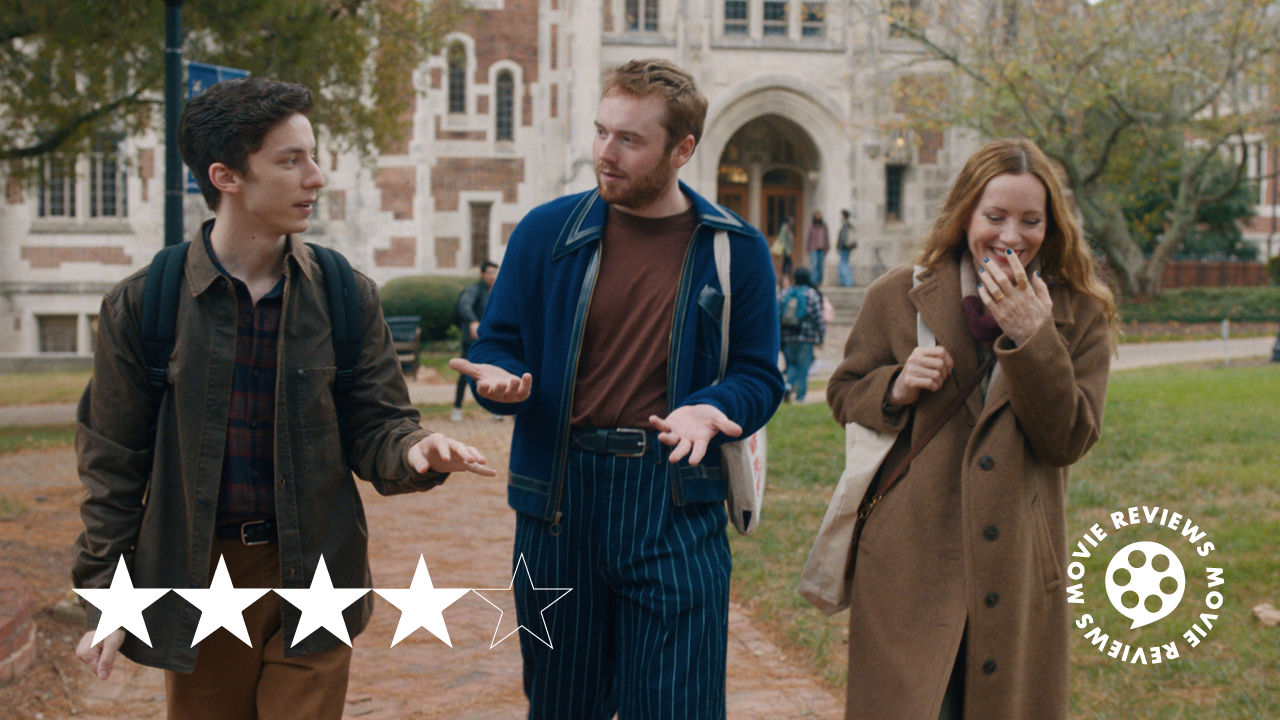
Starring: Leslie Mann, Cooper Hoffman, Andrew Barth Feldman
Running Time: 117 Minutes
Rating: 4/5
It is impossible to approach Poetic License without acknowledging the discourse that surrounds it. Maude Apatow enters filmmaking with a surname that arrives before the film itself, the weight of her father (Judd Apataw) brings conversation of assumption and a sense of inherited opportunity. Interestingly enough - what makes Poetic License quietly compelling is not that it confronts this reality head-on, but that it seems largely uninterested in defending itself against it.
Instead, Apatow delivers a debut that feels intentionally modest — a character-driven “hangout” film that recalls the loose rhythms of 1990s American indie cinema. License feels distinctly analog about its pacing and tone: low stakes, wandering emotional arcs, and an ease with simply spending time alongside its characters. It’s definitely not loud, but seemingly quiet in its stature.
The dialogue never strains for punchlines, instead finding humor in digression, deflection, and emotional avoidance. Conversations drift, jokes land casually, and silences are allowed to breathe. Apatow understands humor as a coping mechanism — a way of circling intimacy without fully confronting it — and it gives the film its most natural rhythms.
A major reason this works is Cooper Hoffman, whose performance carries a sense of cinematic inheritance. Hoffman’s character feels like a shade of his father — a slapstick-adjacent, over-the-top yet deeply sweet sentimental figure that Philip Seymour Hoffman would have embodied effortlessly in his early career. There are moments where Cooper’s physicality, timing, and emotional openness feel almost frighteningly familiar, evoking echoes of performances in films like Along Came Polly or even The Talented Mr. Ripley. It feels a little haunting - and emotionally wrought, considering Philip’s passing.
The film’s emotional core, however, belongs to The film’s emotional core, however, belongs to Leslie Mann, who plays Liz, a woman caught in a quiet relational crisis. This is not a grand midlife implosion, but something murkier and more human: a confusing crossroads between drifting and purpose. Liz begins auditing a poetry class at a local university simply to pass the time, where she crosses paths with Sam (Andrew Barth Feldman) and the enigmatic, wealthy party boy Ari. What follows is a loose love triangle for the boys — and a far more complicated emotional reckoning for Liz, whose desires, doubts, and need for reinvention sit at the film’s center.
Mann’s performance feels especially resonant given her real-life relationship with Apatow. There is an unmistakable tenderness in the way the camera regards her — as if the film itself were a love letter, an ode to a mother-daughter bond translated into cinematic form. Mann is given space to shine in a leading role that balances comedy and vulnerability with remarkable warmth. It’s a reminder of her dramatic range, and the film feels quietly shaped around her presence.
The interplay between Mann, Hoffman, and Feldman is effortless, carrying the film with an ease that makes its imperfections forgivable. There is nostalgia here — not just in the film’s aesthetic, but in its sensibility — a throwback to relationship films that trusted charm, performance, and conversational intimacy to do the heavy lifting.
Poetic License is not a perfect film, nor is it a grand statement of artistic arrival. But it is a confident, deeply likable debut that establishes Maude Apatow as a filmmaker comfortable with humor, softness, and emotional ambiguity. In an era of maximalist first features and self-conscious urgency, her film feels refreshingly unforced — a small, funny, and genuinely human work that suggests an artist willing to grow rather than declare herself fully formed.